Why Tyler Soil Causes Foundation Movement
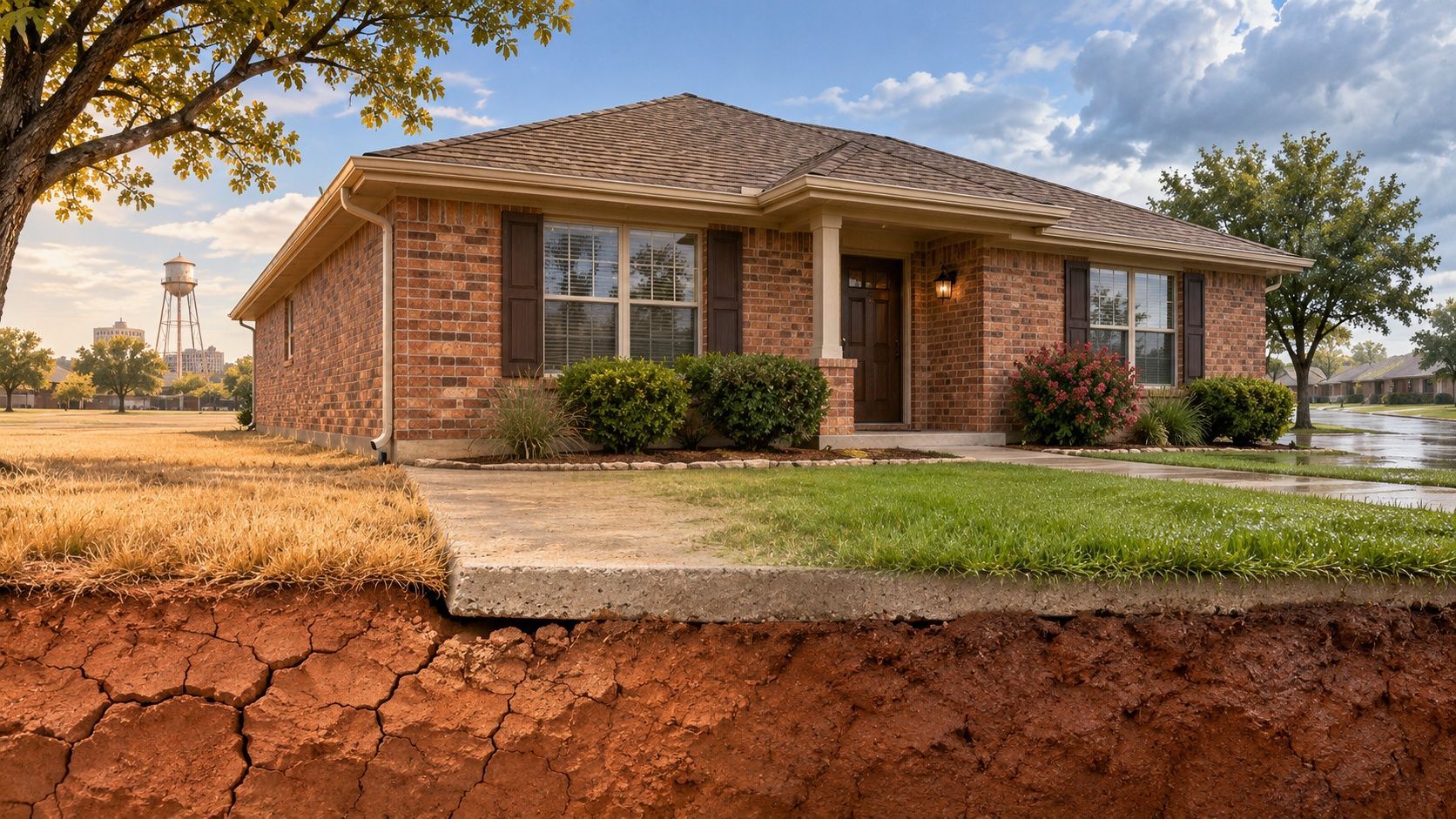
.Soil changes can help explain why a door starts to stick, or a wall develops a crack in Tyler. Some clay swells as it gets wet and shrinks as it dries. When the ground changes size, the foundation above it may move. [1]
The trouble often starts when one part of the ground changes more than another. One corner may rise while another area stays still. That uneven support can put stress on a home.
Still, soil is only part of the story. Drainage, leaks, trees, and the way a house was built also matter. This guide explains what to watch for and what questions to ask before choosing a repair.
What Makes Local Soil Different
Tyler is in Smith County, where soil can have sandy layers near the surface and more clay below. USDA's Oakwood soil description gives one local example. Its reference site is northwest of Tyler along Highway 110. [2]
The example has fine sandy loam near the top and sandy clay loam farther down. USDA also describes water moving through this soil at a moderately slow rate. [2]
This does not mean every Tyler yard has Oakwood soil. It shows why looking only at the top of a lawn can miss what lies below.
A garden bed may look loose and easy to dig. Deeper ground may contain much more clay. Soil placed during construction can add another layer.
The soil under your house may also differ from the soil under a nearby home. Avoid using a neighbor’s repair plan as proof of what your house needs.
Red Soil Does Not Tell the Whole Story
Color alone cannot show how much soil will swell. The amount of clay and the kind of clay both affect that change. [1]
A handful of red dirt cannot tell you how deep a clay layer goes. It also cannot show how the ground beneath a slab behaves.
A site review and, when needed, soil testing provide better answers than a label such as “red clay.”
How Wet and Dry Cycles Move a Foundation
Expansive soil is soil that changes volume as its moisture changes. Think of it as ground that takes up more room when wet and less room when dry. [1]
When Clay Gets Wet
Clay that can expand may push upward as it takes in water. This upward ground movement is called heave.
Picture one side of a house beside a wet flower bed. Another side stays much drier. Those areas may provide different support.
That is an example of how uneven wetting can matter. It is not a diagnosis of every home beside a garden.
When Clay Dries Out
As expansive clay loses water, it can shrink. Parts of a foundation may then move downward.
The size and depth of this change depend on conditions at the site. A dry surface does not reveal all the moisture below a house.
This is why a crack in the yard cannot tell you how far a foundation has moved. Soil changes need to be considered along with the condition of the building.
Why Tyler Weather Matters
Tyler has hot summer days as well as periods of rain. The National Weather Service's July 2026 Tyler report recorded 28 days reaching at least 90 degrees. It also recorded measurable rain on eight days. [3]
Heat and rain can occur in the same month. A monthly rain total does not tell us how evenly moisture reached the soil around a home.
Those conditions help explain why soil moisture deserves attention here. A yard can dry out through a hot spell, then receive rain in a short period.
Rain also reaches different parts of a property in different ways. Roofs shed water. Covered patios shelter the ground. Irrigation wets some areas more than others.
The link between this weather pattern and foundation concerns is changing moisture in susceptible soil. A storm or hot week alone does not prove that a home has damage.
Keep weather notes with any record of new cracks. They give an inspector useful background without deciding the cause in advance.
Why Drainage Can Make the Problem Worse
Water that collects beside a home can create a local wet spot. Poor drainage and plumbing leaks are among the factors the Texas Real Estate Commission lists in foundation movement. [4]
After rain, look from a safe place for puddles near the house. Notice where downspouts empty and whether water flows toward a wall.
A downspout should send runoff to a suitable place away from the foundation. Oklahoma State University Extension explains how drains can help route roof water to an area that can handle it. [5]
Do not move the problem to a neighbor’s yard. If the lot is flat or drainage is unclear, ask for a plan before digging.
Leaking irrigation can be easy to overlook. Tell the person assessing your home about spots that stay wet when the rest of the yard dries.
Check gutters, downspouts, and low spots as part of your regular yard care. Ask for help if water keeps collecting near the house.
Can Trees and Landscaping Affect the Soil
Trees need water, and roots take it from the ground. During drought, tree care may require extra attention.
Texas A&M Forest Service advises checking local watering restrictions before adding water. [6]
TREC also identifies nearby trees and large plants as possible factors in foundation performance. That does not mean a tree beside a house caused its cracks. [4]
Ask for evidence before cutting roots or removing a mature tree. Describe recent changes to the yard, including new beds, removed trees, or changes in watering.
Keep tree care and foundation advice coordinated. A watering plan for a tree is not automatically a repair plan for a house.
Signs That Deserve a Closer Look
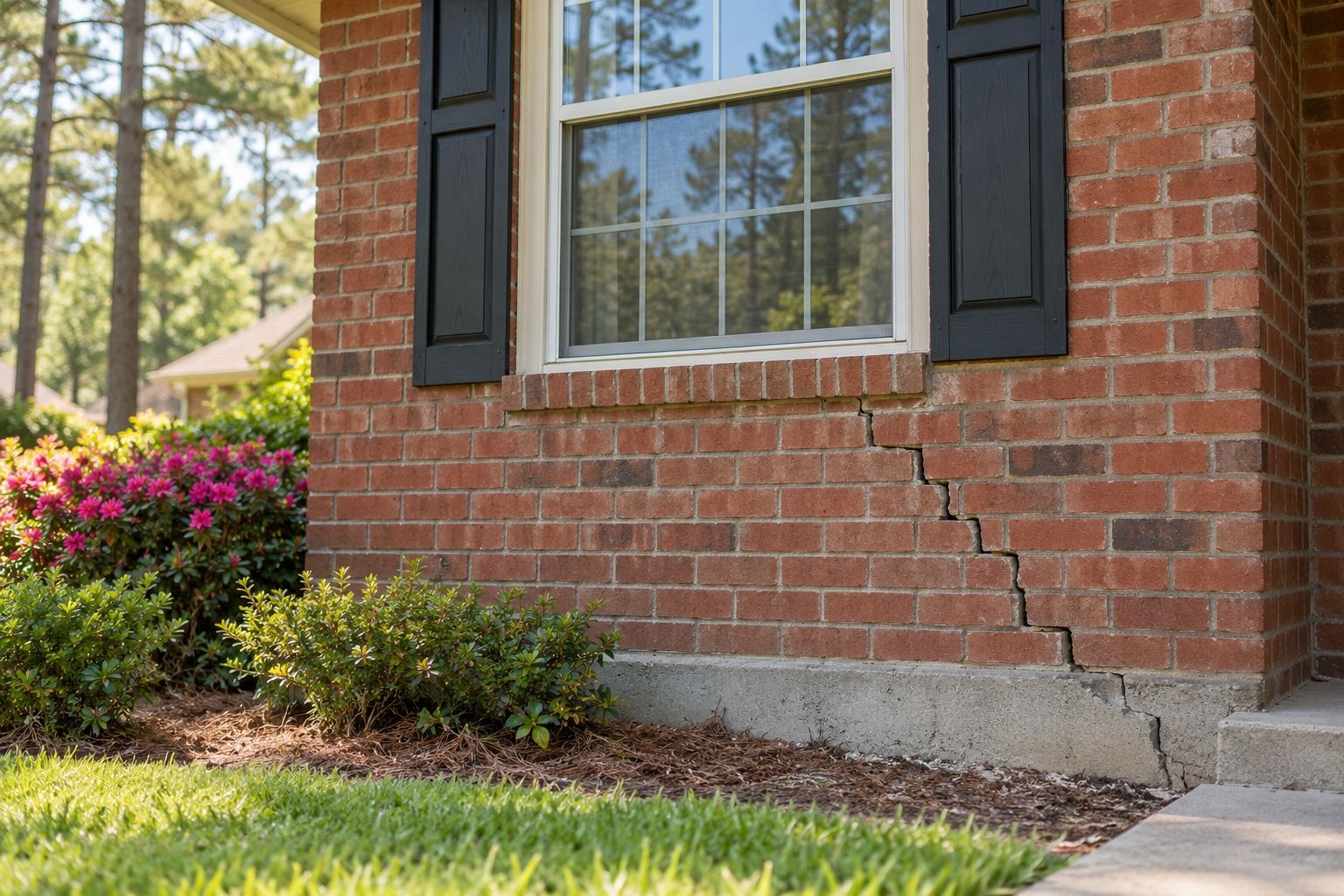
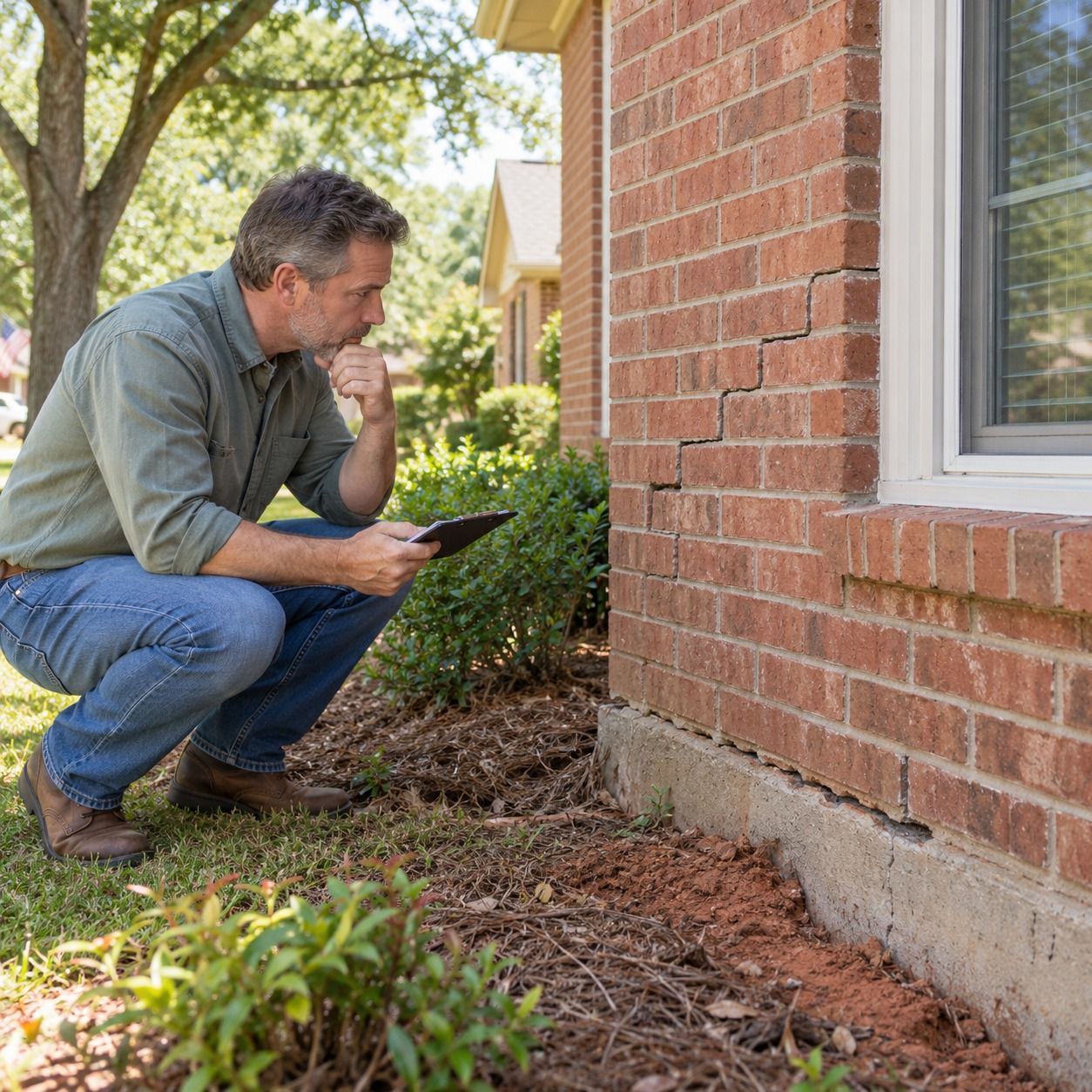
Watch for changes in the building, especially several appearing together. TREC lists sticking doors, sloping floors, and cracks or separations among visible signs of possible foundation concerns. [4]
Record:
• Doors that begin to bind or fail to latch.
• New slopes or dips in floors.
• Wall or ceiling cracks that change.
• New cracks or gaps in brickwork.
One sign does not tell the whole story. Write down when you first noticed it and where it appears.
Read our article, “Is That Crack Serious? A Guide to Foundation Cracks,” for help organizing your observations.
What Homeowners Can Do Next
Keep a Simple Record
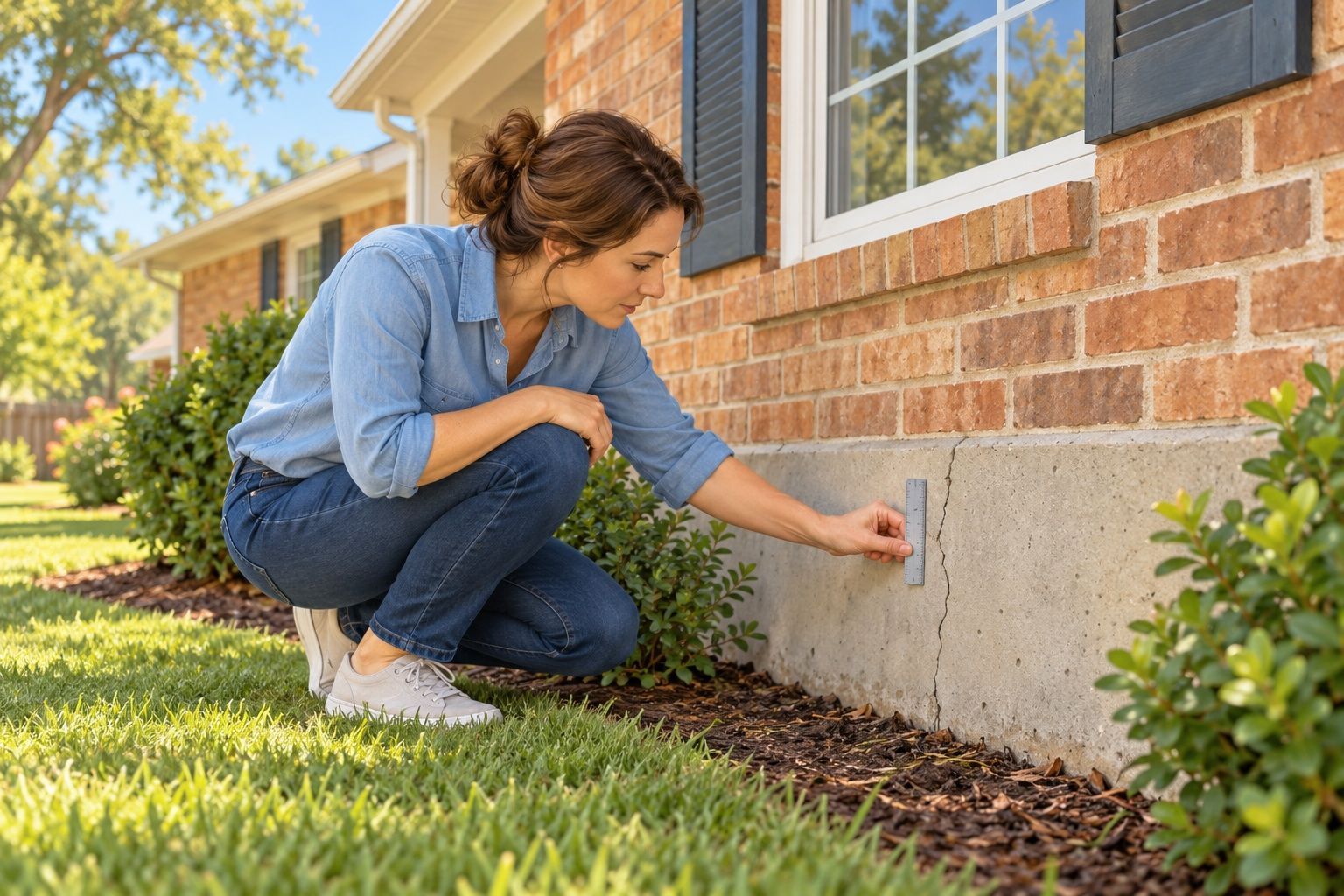
Take clear photos of each concern. Include a ruler beside a crack, and photograph the whole wall as well.
Use the same spot and angle for later photos. Note rain, dry spells, leaks, and any changes in doors or floors.
Ask for Advice Before Major Changes
Avoid guessing at a watering schedule or soaking one corner to try to lift it. Ask what approach fits the soil, drainage, and foundation at your home.
Routine care cannot promise that movement will stop. Keep tracking the building even after a drainage or watering change.
Get the Cause Checked
If changes continue, seek an assessment from a qualified professional. A Texas-licensed engineer with residential foundation experience can help evaluate the concerns. Ask whether soil testing or a plumbing check would help.
Bring your photos and ask:
• What evidence points to the cause?
• Is part of the home rising, settling, or staying stable?
• What should happen before repair work starts?
• How will we track the result?
Common Questions About Tyler Soil
Does Clay Soil Mean My Home Needs Repair?
No. Soil type alone does not establish that repairs are needed. The home’s condition and site findings matter.
Can I Look Up My Soil?
USDA’s Web Soil Survey provides soil maps and related information. It is a useful starting point for learning about an area. [7]
A map does not inspect your foundation or replace testing at the site.
Will Rain Close My Wall Cracks?
Do not rely on rain as a repair. Photograph changes and ask what they mean for your home.
Should I Use the Same Repair as My Neighbor?
Use your neighbor’s experience to gather questions. Ask for a plan based on your own property.
Get Help Understanding Foundation Movement
Start with your observations and a clear explanation of the cause. Ask questions before agreeing to work.
Contact Tyler Foundation Pros to ask about connecting with a foundation repair company serving the area. We provide homeowner information and referrals. We do not inspect homes or perform foundation repairs.
Sources
Numbers in the text refer to these sources. Accessed November 2, 2026.
1. Texas Department of Licensing and Regulation. Foundations on Expansive Soils — Residential. Used for soil behavior, not as a statement of current local code. View source
2. USDA NRCS. Official Series Description — Oakwood Series. A Smith County soil example near Tyler, not a soil identification for every property. View source
3. NOAA National Weather Service, Shreveport. Tyler Climate Summary for July 2026, issued August 1, 2026. Used for the Tyler heat and rainfall example. View source
4. Texas Real Estate Commission. Rendering an Opinion of Foundation Performance: A Guide for Texas Inspectors. View source
5. Oklahoma State University Extension. Addressing Drainage Issues in the Urban Landscape. General drainage guidance. View source
6. Texas A&M Forest Service. Watering Trees During Drought. View source
7. USDA NRCS. Web Soil Survey. View source
This is paragraph text. Click it or hit the Manage Text button to change the font, color, size, format, and more. To set up site-wide paragraph and title styles, go to Site Theme.
Ready to work with Tyler Foundation Pros LLC?
Let's connect! We’re here to help.
Send us a message and we’ll be in touch.
Or give us a call today at +1 903 771 7842
Agency Contact Form
More Marketing Tips, Tricks & Tools